
BLOG
Kleptotoxicity: The Hidden Poison of Taking What Isn’t Ours

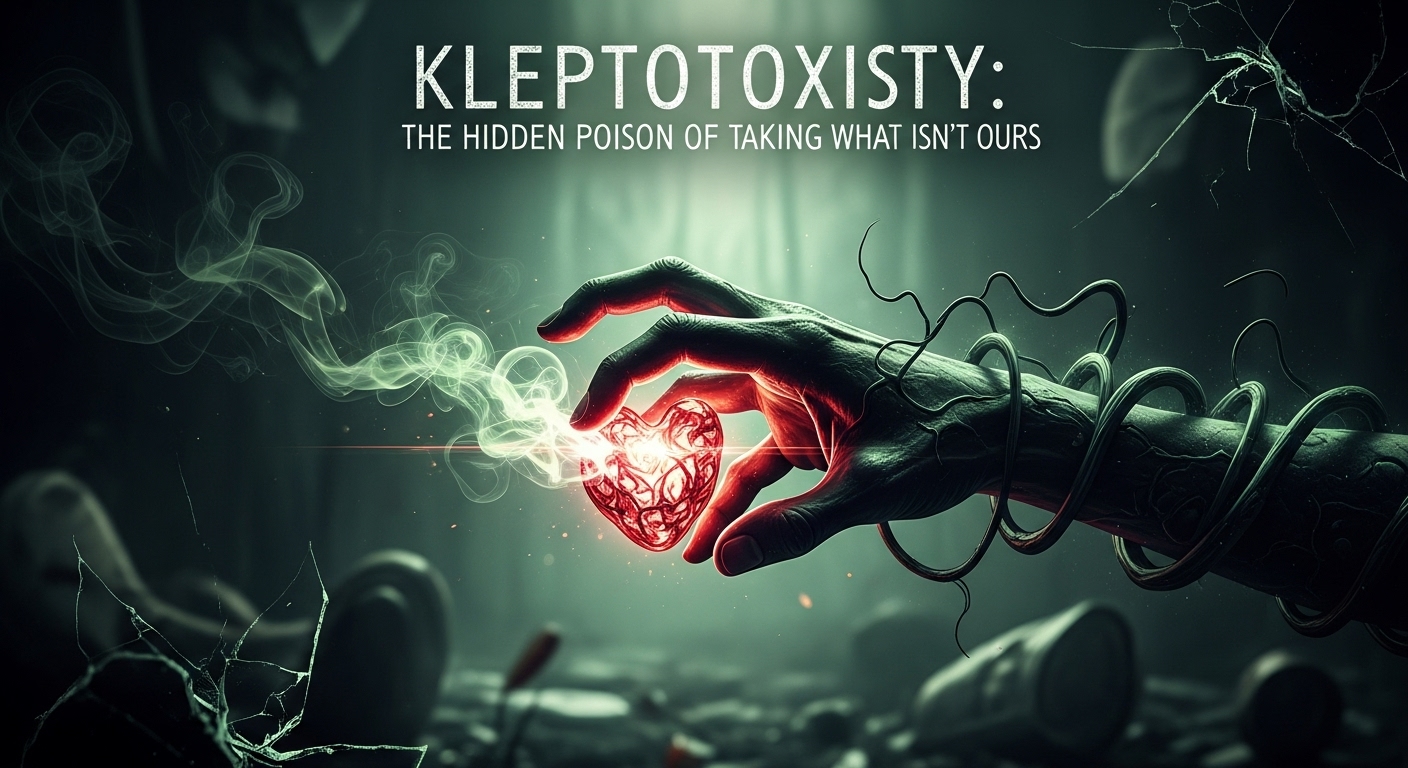
We live in a world of acquisition — where value is measured by what we own, control, or consume. Yet beneath this pursuit lies an invisible poison: kleptotoxicity, the toxic consequence of taking what does not belong to us.
Derived from the Greek kleptein (“to steal”) and toxikon (“poison”), kleptotoxicity describes the emotional, moral, and societal decay that arises from habitual or systemic acts of taking — whether it’s stealing material possessions, exploiting others’ labor, or appropriating emotional energy.
Kleptotoxicity is not just a crime of action — it’s a disease of mindset, a corruption of empathy, and a distortion of the human spirit. It affects both the thief and the society that tolerates the theft.
In an age where greed, manipulation, and unethical acquisition dominate global headlines, understanding kleptotoxicity is essential for rebuilding integrity and balance.
The Meaning and Origins of Kleptotoxicity
While “kleptomania” refers to a compulsive urge to steal, kleptotoxicity goes further — it names the spiritual and relational damage that theft inflicts.
It can manifest in multiple ways:
-
Personal kleptotoxicity – when an individual’s acts of taking erode their inner moral and emotional health.
-
Social kleptotoxicity – when entire systems or cultures normalize exploitation or dishonesty.
-
Emotional kleptotoxicity – when people drain others’ energy, affection, or trust for personal gain.
In short, kleptotoxicity is not only about stolen goods — it’s about stolen goodness.
The Psychology of Taking: Why Humans Steal
To understand kleptotoxicity, we must first explore the psychology behind taking.
Humans are not born thieves — they are born seekers. We take because we desire security, power, or validation. When these desires become distorted or excessive, taking becomes a compulsion.
Psychologists identify several motives behind theft and exploitation:
-
Insecurity – taking as a defense against perceived lack or weakness.
-
Narcissism – taking to affirm superiority or control.
-
Addiction – taking becomes a thrill, a rush of power that briefly fills emotional emptiness.
-
Social conditioning – taking as a learned behavior in competitive or corrupt environments.
Kleptotoxicity begins when these acts stop being isolated incidents and become part of one’s identity or system — a slow poisoning of empathy and self-awareness.
Personal Kleptotoxicity: The Self-Poisoning of the Soul
When individuals repeatedly take what isn’t theirs — whether through lies, manipulation, or theft — they experience an internal corrosion.
This is personal kleptotoxicity — the moral toxicity that infects a person’s psyche and relationships.
1. Loss of Empathy
Every act of unethical taking numbs empathy. The more someone exploits or deceives, the easier it becomes.
Eventually, compassion is replaced by calculation — others become tools, not people.
2. Identity Erosion
Thieves often justify their actions as survival, revenge, or entitlement. But over time, this justification reshapes self-image.
The person becomes defined by the act of taking, not by genuine creation or contribution.
3. Emotional Contamination
Like any toxin, kleptotoxicity spreads. Guilt, paranoia, and shame fester beneath the surface. The constant need to defend dishonesty drains mental energy and peace.
The paradox is tragic: in trying to take more, the kleptotoxic person loses themselves — trust, authenticity, and emotional freedom dissolve.
Social Kleptotoxicity: When Systems Steal
Kleptotoxicity doesn’t just operate on an individual level — it infects entire societies.
Social kleptotoxicity occurs when the act of taking is normalized or institutionalized — when injustice is woven into the structure of power.
Examples include:
-
Corporate exploitation, where profits are built on underpaid labor or environmental harm.
-
Political corruption, where leaders steal public wealth and moral trust.
-
Cultural appropriation, where dominant groups take from marginalized cultures without respect or credit.
In such cases, the toxin of taking becomes collective.
It doesn’t just harm the victims — it corrodes the ethical fabric of the whole community.
As history shows, societies collapse not when they are poor, but when they become morally bankrupt — when kleptotoxicity spreads unchecked through governance, economy, and culture.
Emotional Kleptotoxicity: The Invisible Theft of Energy
Not all stealing is material.
In relationships, some people drain others emotionally — consuming time, affection, and attention without reciprocity.
This is emotional kleptotoxicity — a subtle but devastating form of theft.
Signs include:
-
Constantly taking emotional support but offering none in return.
-
Manipulating empathy through guilt or victimhood.
-
Drawing validation by undermining others.
Emotional kleptotoxicity thrives in imbalance. It poisons intimacy, turning love into control and care into exhaustion.
Over time, both parties suffer — the taker becomes dependent on extraction, and the giver becomes depleted, resentful, or numb.
Kleptotoxic Culture: The Age of Taking Without Giving
The modern world is, in many ways, kleptotoxic by design.
Consumerism rewards acquisition. Social media rewards attention-seeking. Politics rewards manipulation.
We take time, data, credit, and even identities — often unconsciously.
The result is a culture built on extraction rather than contribution.
1. Digital Kleptotoxicity
Online, content is copied without credit, ideas are stolen without acknowledgment, and privacy is mined for profit.
The internet has become both a library and a theft factory — where intellectual and personal boundaries blur.
2. Environmental Kleptotoxicity
The planet itself suffers from humanity’s compulsive taking — deforestation, pollution, and overconsumption.
In this sense, kleptotoxicity is not only psychological but ecological — the poisoning of our shared home through unrestrained greed.
3. Spiritual Kleptotoxicity
When society glorifies wealth and power above compassion and humility, it robs people of meaning.
We start believing that value is measured in possession, not purpose.
This theft of soul — this spiritual kleptotoxicity — leaves us materially full but existentially empty.
The Science of Toxicity: How Taking Corrupts the Taker
Though kleptotoxicity is metaphorical, its effects are measurable in the body and brain.
Studies in neuroscience show that unethical behavior activates stress responses similar to exposure to real toxins.
Chronic dishonesty or guilt elevates cortisol, disrupts sleep, and increases anxiety.
Over time, this leads to psychosomatic toxicity — physical manifestations of moral decay.
This is why even successful thieves or manipulators often live with unease, paranoia, or emotional emptiness.
The body knows what the conscience tries to ignore: that toxic gain is still poison.
The Antidote to Kleptotoxicity: Restoring Balance
If kleptotoxicity is the poison of taking, its antidote is generosity — the conscious act of giving, restoring, or repairing.
Healing begins with three steps:
1. Awareness
Recognize where taking has become habitual or justified.
This requires radical honesty — confronting not only theft of things, but of trust, credit, or kindness.
2. Accountability
Repairing damage means acknowledging harm.
True atonement is not apology alone, but restitution — returning what was taken, whether tangible or emotional.
3. Reconnection
Kleptotoxicity isolates; giving reconnects.
Engaging in service, sharing resources, or creating value counteracts the psychological damage caused by exploitation.
Generosity purifies what greed corrodes.
It restores dignity not only to the giver but to the entire ecosystem of relationships.
Case Studies: Modern Forms of Kleptotoxicity
1. Corporate Scandals
When corporations engage in unethical practices — from tax evasion to data mining — they suffer reputational collapse.
This is organizational kleptotoxicity: the internal culture becomes cynical, innovation declines, and trust evaporates.
2. Creative Plagiarism
Artists and writers who plagiarize may achieve short-term recognition, but they lose authenticity — the creative poison of theft eventually erodes credibility.
3. Emotional Manipulation in Leadership
Leaders who take loyalty or attention without reciprocating integrity infect their teams with fear and apathy — a classic case of social kleptotoxicity.
In each instance, the pattern is the same: the act of taking produces decay.
Kleptotoxicity in Philosophy: The Moral Weight of Taking
Philosophers across history have warned against the dangers of unjust taking.
-
Aristotle saw theft as a disruption of virtue and social harmony.
-
Kant viewed it as a violation of moral autonomy — using others as means, not ends.
-
Marx interpreted systemic theft (exploitation) as the root of alienation.
Kleptotoxicity unites these perspectives — framing theft not just as moral error, but as a toxin that corrupts the human condition.
It reminds us that integrity is not a law but a lifeline: once severed, all relationships — personal, economic, ecological — begin to wither.
The Future: Detoxing Society from the Culture of Taking
To heal from kleptotoxicity, society must shift from extraction to reciprocity — from “How much can I take?” to “What can I give or sustain?”
This transformation involves:
-
Ethical economies, prioritizing transparency and fairness.
-
Conscious consumption, reducing environmental theft.
-
Relational ethics, practicing empathy and consent.
-
Education, teaching the value of contribution over possession.
The goal is not to abolish ambition or ownership, but to balance them with conscience.
Only then can progress become sustainable and human.
Conclusion
Kleptotoxicity is a mirror — one that reflects the quiet corruption within our personal desires and social systems.
It shows that every act of taking without giving carries a cost — not just to the victim, but to the soul of the taker.
To live ethically is to recognize this law of balance: what we take must be matched by what we give.
Only by detoxing our minds, relationships, and institutions from kleptotoxic habits can we restore harmony and trust in a fractured world.


Introduction to Leomorg
Leomorg is quickly becoming a buzzword in 2023, capturing the attention of both businesses and individuals alike. But what exactly is Leomorg? This innovative platform is making waves with its unique offerings, reshaping how we approach technology and communication. With sleek design and powerful functionality, it’s no wonder that more people are turning to Leomorg as their go-to solution. As we explore the top reasons behind its rising popularity this year, you’ll see just why so many are eager to hop on board the Leomorg train.
The Rise of Leomorg in 2023
Leomorg has captured significant attention this year. Its innovative approach to solving common problems is resonating with users worldwide.
As businesses seek efficiency, Leomorg offers compelling solutions that streamline operations. This demand for smarter tools has fueled its rapid growth.
Social media buzz also plays a crucial role in Leomorg’s rise. Users are sharing their success stories, creating a community around the platform.
Moreover, favorable reviews from industry experts lend credibility. As more people discover its benefits, the user base continues to expand exponentially.
The combination of word-of-mouth marketing and exceptional functionality makes Leomorg stand out in 2023. It’s not just another tool; it’s becoming an essential resource for many individuals and organizations alike.
Innovative Features of Leomorg
Leomorg stands out with its groundbreaking features designed to enhance user experience. One of the most exciting aspects is its advanced artificial intelligence capabilities. This technology allows users to streamline their workflows and automate routine tasks effortlessly.
Another notable feature is its customizable dashboard. Users can tailor their interface according to specific needs, making navigation intuitive and personalized. This flexibility fosters productivity by minimizing distractions.
Additionally, Leomorg integrates seamlessly with various tools commonly used in business environments. Whether it’s project management software or communication platforms, users find it easy to connect their existing systems without a hitch.
Security remains a top priority as well. With robust encryption protocols and regular updates, Leomorg ensures that all data stays protected against unauthorized access while maintaining smooth functionality for its users.
These innovative elements combined create an engaging platform that caters to diverse needs across industries.
Positive Impact on Businesses and Individuals
Leomorg is transforming the landscape for both businesses and individuals. Its innovative approach empowers users by streamlining processes that were once cumbersome.
For businesses, this means increased efficiency. Tasks that used to take hours can now be completed in minutes. With improved workflows, companies can focus on what truly matters: growth and customer satisfaction.
Individuals benefit as well. Leomorg offers tools that enhance productivity without overwhelming users. This balance fosters a sense of accomplishment and reduces stress.
The collaborative features also shine here, promoting teamwork across diverse locations. Whether it’s brainstorming ideas or managing projects, Leomorg creates an inclusive environment where everyone’s voice matters.
As feedback rolls in from satisfied users, it becomes clear that Leomorg isn’t just a tool; it’s a catalyst for positive change in everyday operations.
Easy Integration and User-Friendly Interface
Leomorg stands out for its seamless integration capabilities. Businesses can easily connect it with existing tools and software, which reduces the learning curve significantly.
Users appreciate how quickly they can navigate through the interface. The design prioritizes functionality without overwhelming new users. Each feature is accessible, making it suitable for tech-savvy individuals and novices alike.
The dashboard offers a clean layout that highlights important metrics at a glance. This transparency helps users make informed decisions in real time.
Moreover, Leomorg supports customization options tailored to individual preferences or team needs. Such flexibility allows organizations to personalize their experience further.
With straightforward tutorials and responsive customer support, users feel confident exploring all that Leomorg has to offer. This commitment to user-friendliness fosters loyalty among its growing community of followers.
Potential for Future Growth and Expansion
The potential for future growth and expansion of Leomorg is impressive. With a solid foundation established in 2023, the platform is poised to explore new territories.
As industries continue to evolve, so does Leomorg. By adapting quickly to market demands, it can cater to a wider audience. This agility opens doors for partnerships and collaborations that enhance its offerings.
Technological advancements also play a significant role. With innovations on the horizon, Leomorg could integrate features that meet emerging needs. This keeps users engaged and attracts newcomers seeking cutting-edge solutions.
Moreover, global markets present an exciting opportunity. As more businesses look online for tools like Leomorg, its reach can expand significantly beyond local borders.
Investing in user feedback will guide future developments too. Listening to its community ensures the platform evolves with real-world applications at heart.
Conclusion
Leomorg is rapidly becoming a go-to solution for many in 2023. Its innovative features and user-friendly interface are attracting attention from both businesses and individuals alike. The positive impact it has on productivity cannot be overstated, as users find themselves able to achieve more with less effort.
The ease of integration allows companies to adopt Leomorg without the usual headaches associated with new software. This seamless transition is a significant factor behind its rising popularity. Additionally, the potential for future growth and expansion keeps users excited about what’s next.
As trends continue to evolve, keeping an eye on Leomorg will likely prove beneficial for those looking to stay ahead in their respective fields. Whether you’re part of a large corporation or an individual seeking personal efficiency, Leomorg may just be the tool you need this year.

Introduction to Kjellfrid Irene Andreassen
Kjellfrid Irene Andreassen has emerged as a captivating figure in the landscape of modern thought. Her unique perspectives and innovative ideas have sparked conversations around the world, challenging us to rethink long-held beliefs and embrace new paradigms. With a profound ability to blend philosophy with everyday life, she encourages individuals to explore deeper connections within themselves and their communities. This blog post delves into her early influences, groundbreaking contributions, and the controversies that have shaped her journey—all while celebrating the enduring legacy she leaves behind. Join us as we uncover the multifaceted impact of Kjellfrid Irene Andreassen on contemporary society.
Early Life and Influences
Kjellfrid Irene Andreassen was born in a small Norwegian town. Growing up surrounded by nature sparked her curiosity about the world. The simplicity of rural life fostered a deep appreciation for knowledge.
Her parents were educators, instilling values of learning and critical thinking from an early age. They encouraged questions, nurturing her desire to explore various subjects. Literature played a significant role during her formative years, with authors like Henrik Ibsen inspiring her thoughts on society and culture.
Andreassen also faced challenges that shaped her perspective. Experiences in adolescence taught resilience and empathy, leading to a profound understanding of human behavior. This combination of influences laid the groundwork for her groundbreaking ideas later in life.
Friendships with diverse thinkers further enriched her worldview, introducing new philosophies that would shape her future contributions to modern thought. Each relationship added layers to her evolving intellectual landscape.
Breakthrough Ideas and Contributions to Modern Thought
Kjellfrid Irene Andreassen brought forth transformative ideas that reshaped contemporary discourse. Her exploration of interdisciplinary approaches elevated discussions in philosophy, sociology, and psychology.
One notable contribution is her concept of relational dynamics, which emphasizes the interconnectedness of individual experiences within larger societal frameworks. This perspective invites critical examination of how personal narratives influence collective identities.
Andreassen also championed emotional intelligence as a pivotal aspect of human interaction. By advocating for its inclusion in educational settings, she encouraged empathy and understanding among diverse groups.
Her work on sustainable practices highlighted the ethical responsibility individuals have toward the environment. Through innovative models, she bridged gaps between scientific research and practical implementation.
These groundbreaking concepts continue to inspire thinkers today, challenging norms while inviting fresh perspectives into age-old debates about humanity’s place within society and nature.
Controversies and Criticisms
Kjellfrid Irene Andreassen’s ideas have not been without their detractors. Some critics argue that her theories lack empirical support, questioning the validity of her groundbreaking concepts.
Her approach to social dynamics has sparked heated debates within academic circles. Skeptics often highlight perceived gaps in her methodologies, suggesting that they undermine the strength of her conclusions.
Additionally, certain cultural perspectives challenge Andreassen’s viewpoints on identity and ethics. Critics assert that these lenses can lead to oversimplifications of complex societal issues.
Despite this pushback, many supporters believe that such controversies only enrich discussions surrounding her work. They argue that spirited debate is essential for intellectual growth and understanding in any field.
Andreassen herself encouraged critical dialogue, often welcoming differing opinions as a way to refine thoughts and advance knowledge further.
Legacy and Impact on Society
Kjellfrid Irene Andreassen’s impact on society is profound and far-reaching. Her ideas have sparked conversations across various disciplines, challenging established norms.
She advocated for a more inclusive approach to education. This has inspired institutions globally to rethink their methodologies. Her emphasis on critical thinking empowers students to question rather than accept blindly.
In social movements, Andreassen’s insights have galvanized activists. They utilize her frameworks to address inequality and advocate for marginalized voices.
Her written works continue to resonate with new generations of thinkers. Many cite her as a pivotal influence in shaping contemporary discourse around ethics and responsibility.
The legacy she leaves behind urges us all towards introspection and action, prompting individuals and communities alike to engage deeply with the world around them. The ripple effects of her contributions are evident in today’s societal shifts, paving pathways for future dialogues that matter.
Inspirational Quotes from Kjellfrid Irene Andreassen
Kjellfrid Irene Andreassen’s words resonate deeply with those seeking inspiration and clarity. Her perspectives challenge conventional wisdom, inviting us to think differently.
One powerful quote speaks to resilience: “Strength emerges not from never falling, but from rising every time we do.” This reminds us that setbacks are stepping stones on the path to success.
She also emphasizes the importance of empathy in her work: “Understanding begins where judgment ends.” This simple yet profound statement encourages a more compassionate approach to our interactions.
Another thought-provoking line captures the essence of curiosity: “The questions we ask shape our reality.” It serves as a reminder to engage with the world around us actively.
These quotes reflect her unique insight into human experience. They continue to inspire individuals across various fields, pushing boundaries and encouraging personal growth.
Conclusion: Remembering the Legacy of Kjellfrid Irene Andreassen
Kjellfrid Irene Andreassen’s journey through life was marked by her profound insights and innovative perspectives. Her early experiences shaped a unique worldview that allowed her to challenge conventional thought. Through her groundbreaking ideas, she opened new avenues for exploration in various fields.
While not without controversy, Andreassen’s work sparked essential conversations around topics often considered taboo. Critics have voiced their opinions, but the discourse she generated has led to greater understanding and progress.
Her legacy extends far beyond academia; it resonates within society as a whole. Today, we see echoes of her thoughts influencing modern thinkers and inspiring individuals to question the status quo.
Andreassen’s words continue to inspire many. Quotes attributed to her remind us of the power of critical thinking and creativity in shaping our world.
Remembering Kjellfrid Irene Andreassen means cherishing the spirit of inquiry she embodied. It is about keeping alive the courage to challenge norms while igniting curiosity in generations yet to come. The impact she made serves as a beacon for all who seek knowledge and understanding in an ever-evolving landscape.

Introduction to BK Horse Training
Welcome to the world of BK Horse Training, where passion meets expertise. Whether you’re a seasoned rider or just starting out, mastering the art of horsemanship is an exciting journey that can transform your relationship with these magnificent creatures. At BK Horse, we believe that every horse and rider can achieve greatness together through understanding, communication, and trust.
In this blog post, we’ll dive into essential tips and techniques that will elevate your training sessions and deepen your bond with your horse. From building a solid foundation in horsemanship to addressing common challenges you may face along the way, we’ve got you covered. Get ready to saddle up for an enlightening ride into effective horse training!
Understanding the Basics of Horsemanship
Horsemanship is more than just riding a horse. It’s an intricate blend of knowledge, skill, and respect for the animal. Understanding your horse’s behavior is key to becoming a proficient rider.
Start by learning about equine body language. Horses communicate through movements and expressions. A raised head or pinned ears can tell you if they feel anxious or threatened.
Groundwork plays an essential role in establishing trust. Spending time with your horse without the pressure of riding helps strengthen your bond.
Familiarize yourself with basic grooming techniques too. This not only keeps your horse healthy but also enhances their comfort level around you.
Remember that horsemanship is an ongoing journey filled with lessons at every corner. Every interaction offers insights into building a solid foundation for both you and your horse as partners in this rewarding experience.
Building a Strong Relationship with Your Horse
Building a strong relationship with your horse is essential for effective training. Trust is the foundation of this bond. Spend quality time together, even when you’re not riding.
Grooming and hand-walking are excellent ways to connect. They promote relaxation and help you understand your horse’s body language better.
Listen to their needs; every horse has its own personality. Some may crave affection, while others prefer space. Be observant and responsive.
Use positive reinforcement during interactions. Treats or praise can go a long way in reinforcing good behavior.
Consistency in handling also builds trust over time. Stick to routines that work well for both of you, creating predictability in your relationship.
Remember, patience is key as each bond develops at its own pace. Celebrate small milestones along the way; they strengthen your partnership immensely.
Mastering Communication with Your Horse
Effective communication with your horse is essential for successful training. Horses are incredibly perceptive animals that pick up on body language, tone of voice, and even emotions.
Begin by observing your horse’s reactions to your movements and cues. Are they relaxed or tense? Adjusting how you carry yourself can significantly impact their response. A calm demeanor often encourages a similar reaction in your horse.
Next, focus on clear signals. Use consistent commands for specific actions. Whether you’re asking them to trot or halt, repetition will help reinforce understanding over time.
Remember that patience plays a crucial role here. It may take time for your horse to fully grasp what you want from them. Celebrate small victories; each step forward builds trust between both of you.
Be mindful of the environment around you as it influences communication too—avoid distractions that could confuse or stress out your horse during training sessions.
Training Techniques for Different Disciplines
Different disciplines require tailored training techniques. Whether you aim to excel in dressage, jumping, or western riding, understanding these nuances is crucial.
For dressage, focus on flexibility and precision. Work on transitions and lateral movements. These exercises enhance your horse’s balance and responsiveness.
Jumping demands a different approach. Emphasize rhythm and confidence through grid work. Gradually increase jump heights to build trust between you and your horse.
Western riding emphasizes communication with subtle cues. Groundwork plays a vital role here; it establishes the foundation of respect before advancing to complex maneuvers like reining or barrel racing.
Each discipline has its unique challenges but prioritizing specific skills will yield better results over time. Experiment with various methods while maintaining an open mind for learning new techniques suitable for BK Horse training success.
The Importance of Patience and Consistency in Horse Training
Patience and consistency are the cornerstones of effective horse training. Every horse learns at its own pace, and rushing the process can lead to setbacks. Embracing a patient mindset fosters trust between you and your horse.
Regular practice is vital for reinforcing lessons. When you train consistently, your horse begins to understand what is expected over time. This builds confidence in both of you.
It’s essential to celebrate small victories along the way. These moments not only motivate but also strengthen the bond shared with your equine partner.
Remember that frustration can hinder progress. Staying calm during challenging sessions allows for better communication and understanding between trainer and horse.
Incorporating patience into your routine cultivates a positive learning environment. This approach ultimately leads to more successful outcomes in horsemanship, paving the path toward mastering various skills together.
Common Challenges and Solutions in Horse Training
Every horse trainer encounters challenges, no matter their experience level. One common issue is resistance from the horse during training sessions. This can stem from fear or misunderstanding.
To tackle this, break down tasks into smaller steps. Reward your horse for any progress, however minor it may be. Positive reinforcement builds confidence and encourages willingness.
Another frequent challenge is a lack of consistency in commands and cues. If you vary your signals or timing, your horse may become confused about what you’re asking.
Establish a clear set of cues that remain the same across all training sessions. Consistency helps solidify understanding and enhances communication between you and your equine partner.
Emotional states play a significant role in training effectiveness. Horses pick up on anxiety or frustration from their trainers.
Stay calm and patient; create an environment where both you and the horse feel safe to learn together.
Tips for Staying Safe and Preventing Injuries While Training
Safety is paramount when training horses. Always wear appropriate gear, including a helmet and sturdy boots. This protects you in case of unexpected situations.
Before starting any training session, assess your horse’s health and temperament. A well-rested and healthy horse is less likely to exhibit unpredictable behavior.
Clear the training area of any obstacles that could pose a risk. Ensure the ground surface is even to avoid slips or falls.
Establish clear boundaries with your horse from the beginning. Understanding each other’s space helps prevent accidents during exercises.
Stay calm and focused while working with your horse. Your energy influences their behavior; remaining composed can lead to better outcomes.
Never hesitate to seek help if you’re unsure about techniques or behaviors. Learning from experienced trainers can enhance safety for both you and your horse.
The Role of Trust and Respect in Horsemanship
Trust and respect form the foundation of effective horsemanship. Without them, the bond between horse and rider falters.
A horse that trusts its handler will be more willing to engage in training. This willingness transforms challenges into learning opportunities rather than struggles. When a horse feels safe, it opens up emotionally.
Respect goes both ways; riders must also earn their horse’s trust through consistent actions. Understanding your horse’s body language can nurture this mutual respect. Horses communicate subtly, and recognizing these signals is key.
Building this dynamic requires time and patience. Rushing the process can lead to misunderstandings or create fear instead of confidence.
Engaging with your horse calmly strengthens their trust in you while ensuring they feel valued as partners in the journey ahead. Creating an environment where both parties feel respected fosters a thriving relationship vital for successful training experiences.
Conclusion
Mastering the art of horsemanship is a journey that requires dedication, knowledge, and an understanding of both the horse and rider. BK Horse Training provides valuable insights into building strong relationships with your equine partner.
Effective communication is essential. By learning to read your horse’s body language, you can create a bond built on trust. Utilizing various training techniques tailored to different disciplines helps ensure that both you and your horse thrive in any setting.
Patience and consistency are cornerstones of effective training. Challenges will arise, but being equipped with solutions allows you to navigate these obstacles smoothly. Always prioritize safety for yourself and your horse as it fosters a positive training environment.
The foundation of successful horsemanship rests upon mutual respect between rider and horse. With time spent nurturing this connection, you’ll find joy in every ride together.
Embracing these principles from BK Horse Training can transform not only how you train but also enhance the experiences shared with your horse along the way. Happy riding!
-

 TECH6 months ago
185.63.263.20: Insights into This Unusual IPv4 Address
-

 BLOG10 months ago
Rosy Kellogg: Uncovering the Life and Legacy of a Renowned Figure
-

 BLOG11 months ago
Xaller: A Comprehensive Guide to Understanding Its Significance and Applications
-

 BLOG11 months ago
Korpenpelloz: An In-Depth Exploration of Its Significance
-

 BLOG11 months ago
Carmenton.xyz: Everything You Need To Know
-

 BLOG7 months ago
Pyjamaspapper: The Pajama-Clad Dad Who’s Always There
-

 BLOG10 months ago
Zepbound: A Comprehensive Guide to Weight Loss
-

 BLOG10 months ago
Vidude: A Comprehensive Exploration of a Multifaceted Concept